 WOVEN PLATEAU
From Tent to Temple
Tibetan textiles do not occupy a single context. They move through the full spectrum of life — from the felted floors of nomadic yak-hair tents to the pillared assembly halls of great monasteries. Each context shapes the textile differently.
June 2026 · 5 min read
The Nomadic Tent
In the black yak-hair tents of nomadic pastoralists, textiles served as the architecture of daily life. Felted wool mats covered the ground, providing insulation against the frozen earth. Saddle rugs cushioned both horse and rider on journeys that could last weeks. Woolen blankets and clothing protected against winter temperatures that dropped far below freezing.
These nomadic textiles were not decorative. They were survival tools — pragmatic, durable, and inseparable from the rhythm of pastoral life. Yet even here, pattern and color appeared: stripes on saddle blankets, simple geometric borders on tent mats, the natural browns and creams of undyed wool arranged in pleasing alternation. The impulse to make even the most functional object beautiful is deeply human.
The Village Household
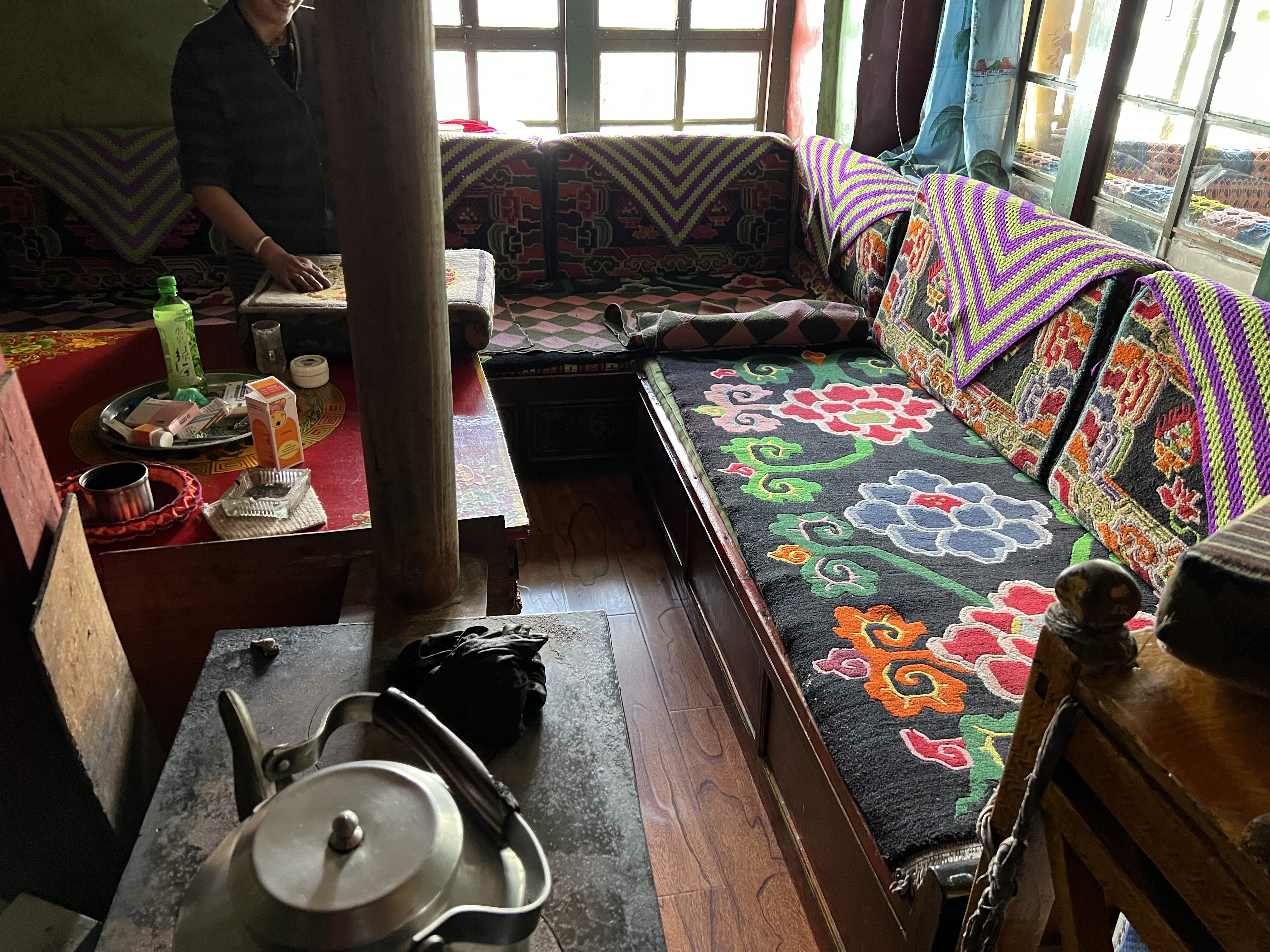
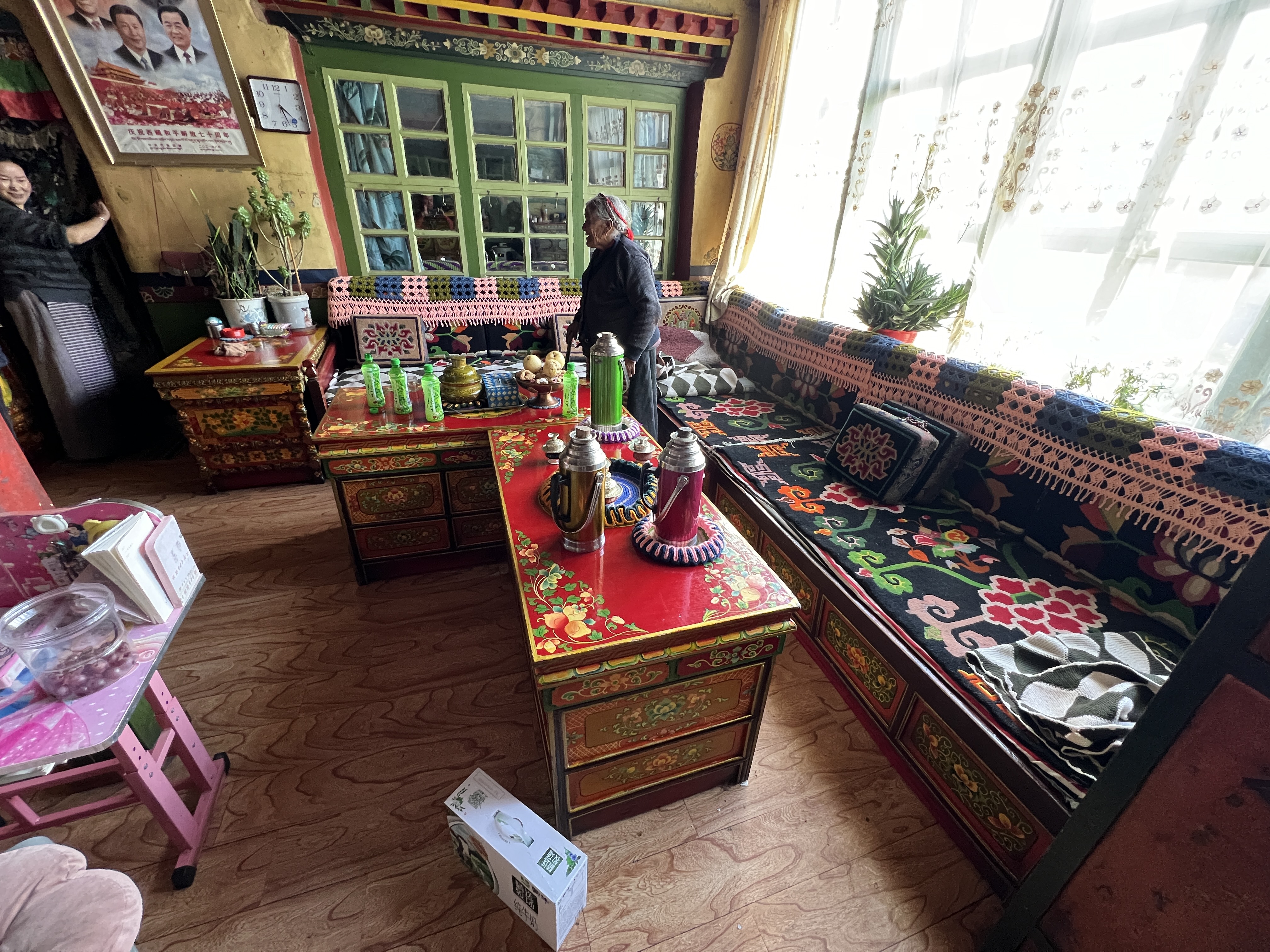
In settled farming villages, the household became the center of textile production and use. The khaden — the body-scale sitting rug — defined domestic space. Laid on the kang (the raised platform along the wall), khaden marked where family members sat, ate, slept, and received guests. The quality of a family's khaden signaled their status and hospitality.
Winter was the weaving season. When barley fields lay fallow under snow, the loom became the focus of household activity. Women spun wool; men wove; children learned by watching. The carpet was not a commodity produced for an anonymous market — it was made within the household, often for the household, carrying the specific knowledge and aesthetic preferences of a particular family and village.
The Monastery
In Tibetan Buddhist monasteries, carpets took on their most formal and elaborate expression. Long runners — some spanning the entire length of an assembly hall — marked seating for hundreds of monks during prayer. Throne carpets elevated the seats of high lamas, their designs incorporating the most auspicious symbols: dragons for protection, lotuses for purity, endless knots for the interconnectedness of all things.
The Wangden Valley, in particular, became famous for monastery-grade carpets — densely knotted, richly colored, and designed to harmonize with the butter lamps, gilded statues, and painted murals of monastic interiors. These carpets were not furnishings in the modern sense. They were integral to the architecture of devotion, defining sacred space and supporting the bodies of those engaged in spiritual practice.
Door coverings, pillar wraps, and ceremonial textiles completed the monastic textile environment. A visitor entering a Tibetan monastery would find themselves surrounded by woven wool — underfoot, on the pillars, framing the doorways — a total textile environment that softened sound, held warmth, and carried the visual language of Buddhist cosmology.
Continuity Across Contexts
What is remarkable about Tibetan textiles is the continuity across these vastly different contexts. The same knotting technique, the same wool, the same basic loom — adapted and refined but never fundamentally changed. A saddle rug and a temple runner are different answers to different needs, but they share a common textile DNA. This continuity across the spectrum of life — from the practical to the sacred, from the domestic to the ceremonial — is one of the defining features of the Tibetan weaving tradition.