 WOVEN PLATEAU
Our Story
A textile tradition
from the roof of the world
A Tibetan carpet is not merely a decorative textile. It belongs to a wider tradition in which wool, handwork, domestic life, Buddhist visual culture, and bodily experience are closely connected.
Origins
The Tibetan plateau, with altitudes ranging from 1,000 to 28,000 feet, demanded warmth, resilience, and comfort. In this harsh and beautiful landscape, wool became the essential material of daily life — transformed by skilled hands into carpets, cushions, clothing, tents, and horse trappings.
Tibetan carpets appeared in temples, homes, monastic halls, tents, and on horseback. Some were used for sitting, sleeping, praying, or receiving guests. Others served as saddle rugs, temple runners, door coverings, or ceremonial sitting mats. This range of uses shows that Tibetan rugs are not a single product type, but a living textile tradition shaped by climate, wool, mobility, devotion, and domestic life.
The tradition may stretch back a thousand years or more, yet the basic patterns of life it served have remained remarkably consistent. Farmers grew barley in the warm months and wove wool during the long winters. Nomadic pastoralists brought wool, meat, and other goods to the valley markets, continuing a cycle of exchange that has endured for centuries.
Three Scenes
Temple, Household, Horseback
The Temple
In monasteries and shrines across Tibet, carpets served as meditation seats, ceremonial runners, and throne covers. Long runners were laid in assembly halls to mark seating for monks during prayer. Red, orange, and gold — the colors of monastic life — predominated, harmonizing with butter lamps, gilded statues, and the robes of lamas.
Wangden Valley carpets were specifically commissioned for the great Gelugpa monasteries — Drepung, Sera, and Ganden — and for the Potala Palace itself.
The Household
In Tibetan homes, the kang — a raised platform often running along a wall — was the center of family life. Here, carpets were laid for sitting, sleeping, eating, and receiving guests. The khaden, a body-scale sitting rug, was the most intimate textile: not placed under furniture, but directly beneath and around the body.
A well-made khaden was treasured. When it wore thin, it was moved to a sleeping area, then to the kitchen, and finally cut into smaller pieces — nothing was wasted.
The Horseback
Tibetans were passionate travelers, and the saddle rug was as essential as the saddle itself. Made to cushion both rider and horse, these textiles were often boldly patterned and built to withstand the rigors of long journeys across mountain passes.
Horse blankets, pack-animal covers, and forehead decorations for mules completed the equestrian textile tradition — evidence that Tibetan weaving served movement, not just stillness.
The Craft
From wool to woven art
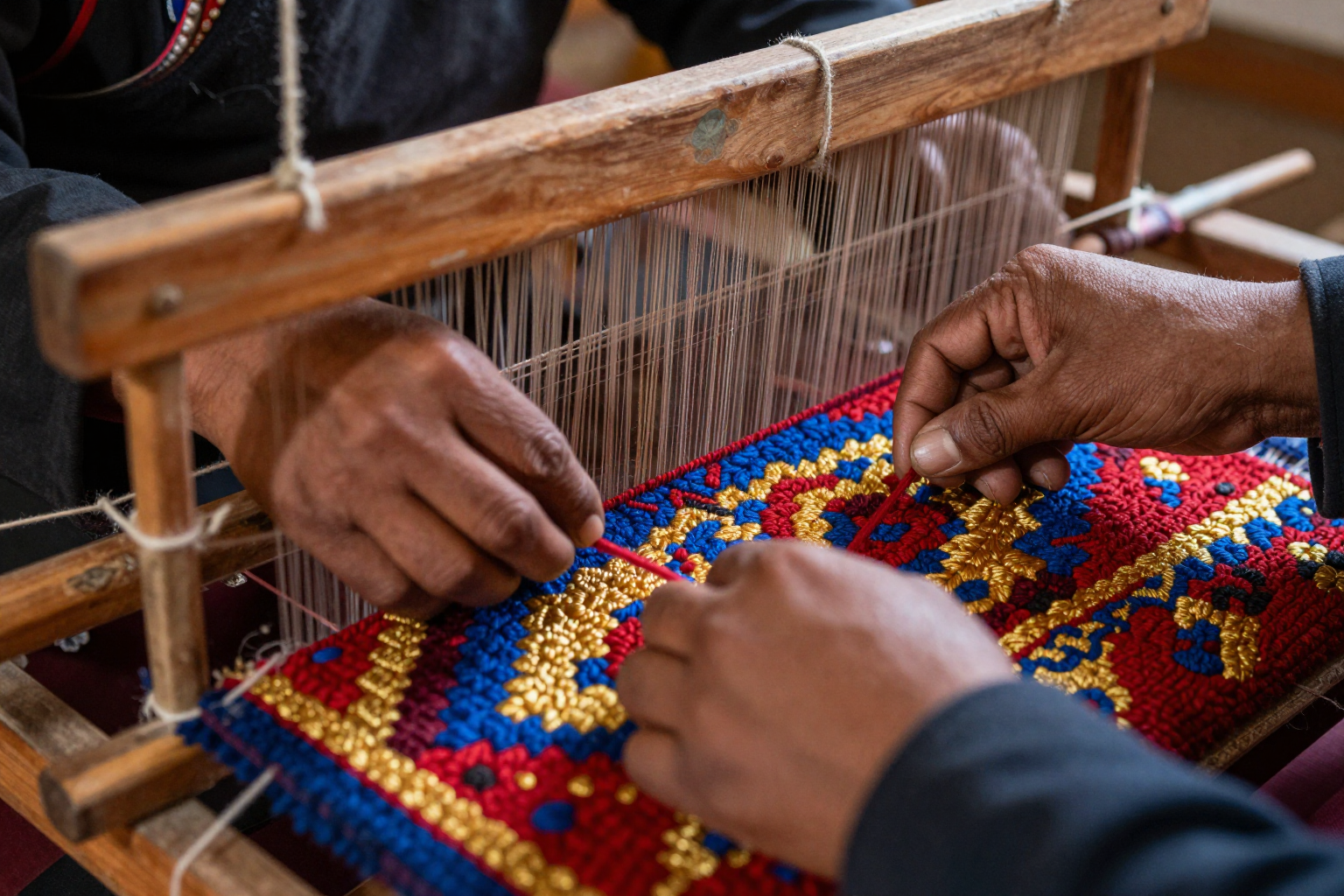
The classic Tibetan pile carpet — the drumtse— is woven on a vertical loom using a distinctive knotting technique. The weaver loops yarn around a rod and a continuous warp thread, then cuts the loop to create pile. Row by row, knot by knot, the design emerges from the weaver's hands.
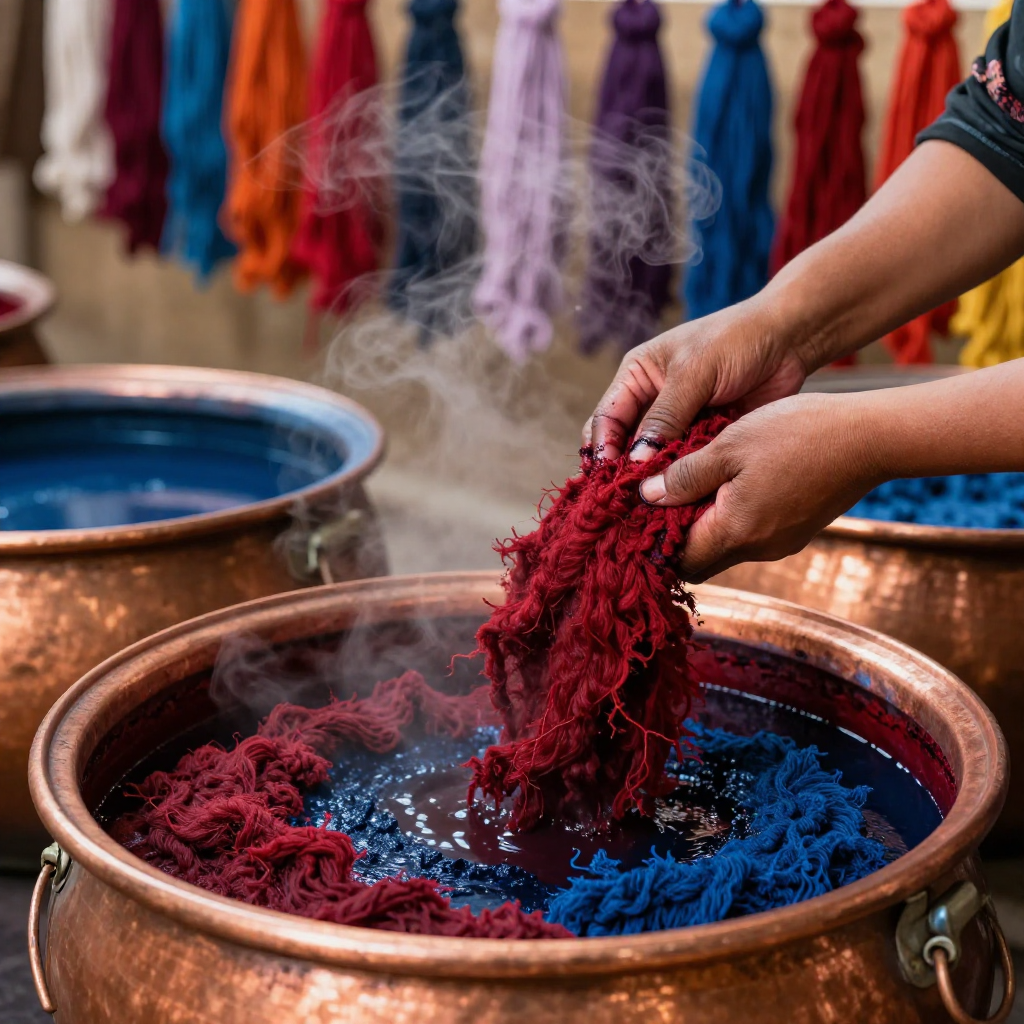
The wool comes from sheep grazing at high altitudes — longer, stronger, and more resilient than lowland fibers. After shearing, the wool is cleaned, carded, and spun by hand. Traditional dyes are drawn from the landscape: indigo for blue, madder root for red, walnut husks for brown, and a range of local plants for yellows and greens.
A single khaden may take over a month to complete. After weaving, the carpet is carefully trimmed — a skill in itself — so that the motifs emerge with greater clarity and the surface achieves a refined, even texture. The value lies not only in the wool and pattern, but in the time, handwork, and human judgment held within each textile.
1,200+
Knots per sq. decimeter
30+
Days to weave one khaden
4,000m
Minimum grazing altitude
1,000+
Years of tradition
Visual Language
Patterns & Their Meanings
The motifs of Tibetan carpets are rich but often direct and readable. They are not obscure codes, but visual expressions of wishes for peace, abundance, stability, and a good life.
Dragon
Power, celestial realm, good fortune
Adapted from Chinese imperial symbolism
Phoenix
Grace, peace, harmony
Often paired with the dragon
Lotus
Enlightenment, purity rising from mud
Buddhist sacred flower
Peony
Abundance, wealth, beauty
From Chinese silk brocade traditions
Tiger
Spiritual achievement, fearlessness
Ancient Tibetan and Central Asian motif
Swastika (Yungdrung)
Eternity, stability, good fortune
Buddhist and Bon religious symbol
Cloud Motifs
Wish fulfillment, prosperity
Adapted from Chinese ruyi scepter
Snow Lion
Fearlessness, joy, strength
Symbol of the Tibetan plateau
Bat
Good luck, gambler's fortune
Chinese homophone for happiness
For Modern Homes
A place to sit, stay, and slow down
Though rooted in Tibetan tradition, the khaden is remarkably well suited to modern living. Unlike conventional rugs arranged around furniture, it creates its own destination — a place for the body to rest directly on wool and warmth.
By the window — a reading corner bathed in natural light
In a tea room — inviting guests to sit close to the ground
In a meditation space — a warm, defined boundary for practice
In the study — for quiet thinking and brief rest
On a daybed — between carpet, cushion, and bedding
Its appeal is not about making a room look like Tibet. It is about bringing a way of living — one that values sitting, staying, and slowing down — into the modern home.
Explore the Collection
Each piece in our collection is handwoven, unique, and accompanied by its story — the materials, the motifs, and the hands that made it.
View Collection