 WOVEN PLATEAU
The Making
The Hands Behind the Rug
A Tibetan carpet is not made by machine. It is made by hands — hands that have learned the craft across generations, hands that tie each knot with intention, hands that understand wool the way a musician understands their instrument.
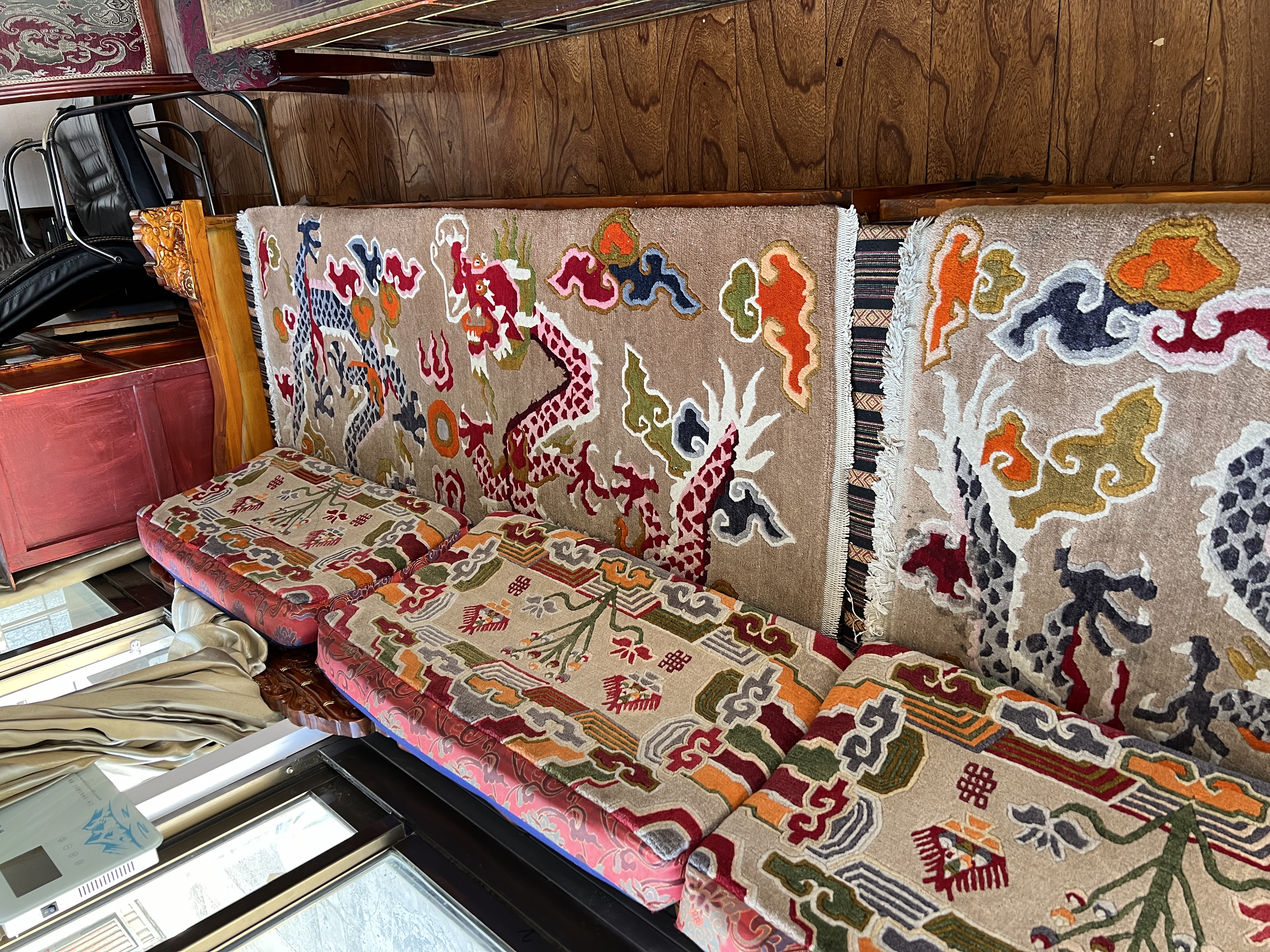
The Vertical Loom
The traditional Tibetan carpet is woven on a vertical loom — a simple but ingenious wooden frame that holds the cotton warp threads under tension. The weaver sits or stands before it, working row by row, knot by knot. This loom has remained largely unchanged for centuries because it works: it gives the weaver direct control over tension, density, and pattern placement.
Unlike mechanized looms that produce identical pieces at speed, the vertical loom demands patience. A single khaden — the body-scale sitting rug — takes a skilled weaver over a month to complete. Larger pieces can take three months or more. This slowness is not inefficiency; it is the very nature of handcraft.
The Tibetan Knot
The defining technical feature of Tibetan carpets is the knot — specifically the Tibetan knot (also known as the Senneh knot). Unlike the Persian or Turkish knot, the Tibetan knot wraps around a continuous warp rod, creating a pile that is both dense and remarkably even. This technique allows for knot densities of 800 to over 1,200 knots per square decimeter, giving Tibetan carpets their characteristic clarity of pattern and resilience underfoot.
Each knot is tied by hand. The weaver loops the wool yarn around the warp, pulls it tight, and cuts it — then moves to the next. This rhythm repeats thousands of times per day, building the carpet row by row from the bottom up. It is a meditative process. Many weavers describe the work as a form of contemplation, the repetitive motion creating its own quiet focus.
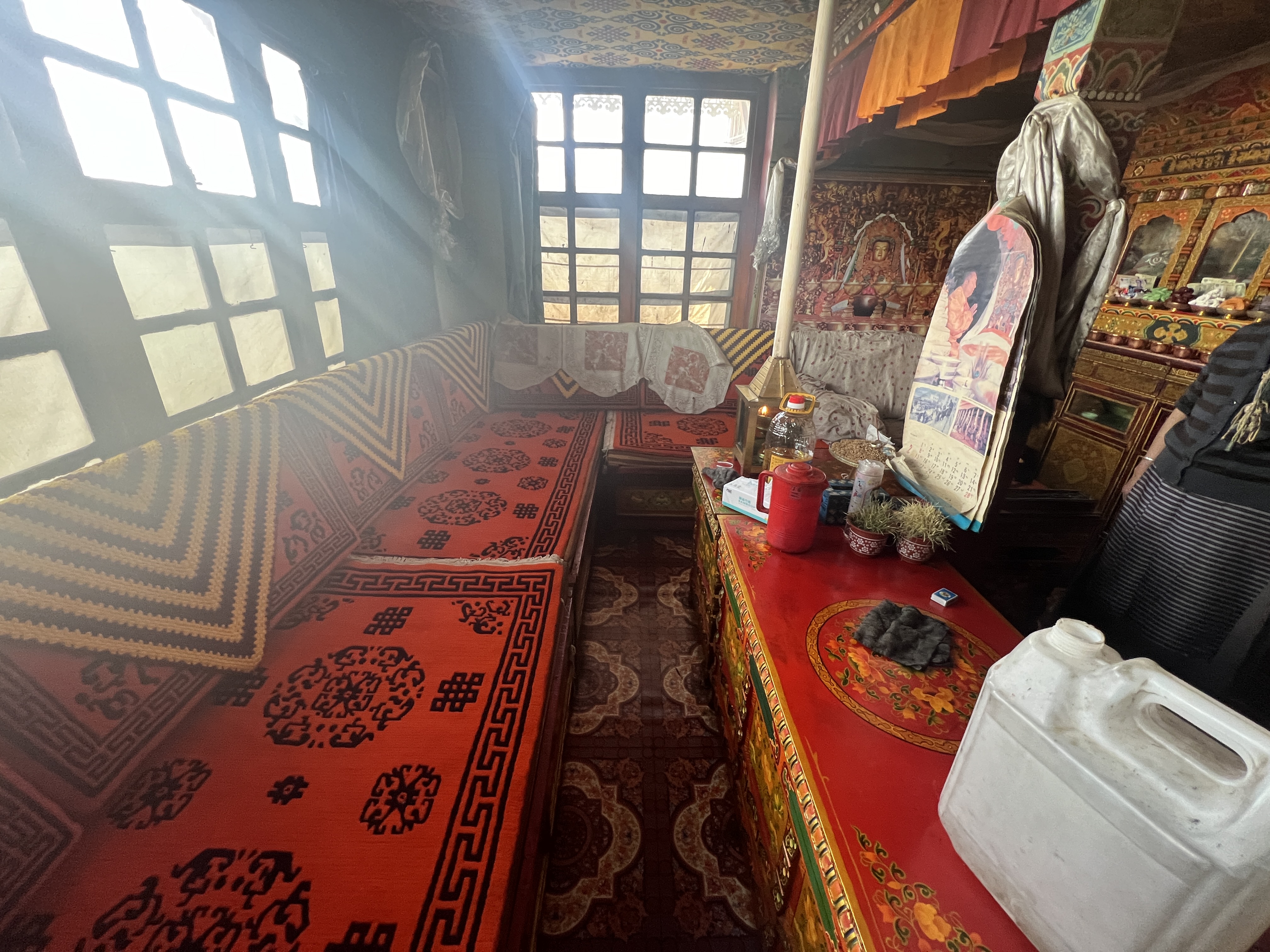
Trimming & Finishing
Once the knotting is complete, the carpet is cut from the loom and the finishing begins. The surface is carefully trimmed with large shears — a skill that takes years to master. Too shallow a trim and the pattern remains blurry; too deep and the pile loses its softness. The trimmer must read the surface like a map, following the contours of the design to bring each motif into sharp relief.
After trimming, the carpet is washed in cold highland water, which helps the wool fibers bloom and settle into their final texture. The piece is then stretched and dried in the mountain sun — a final touch that connects the finished textile back to the landscape where its wool was grown.
A Living Tradition
The techniques used today are essentially the same as those used centuries ago. Walk into a workshop in Gyantse today and you will see looms, tools, and hand movements that would be instantly recognizable to a weaver from the 18th century. This continuity is not stagnation — it is the sign of a craft that has found its perfect form.
Yet the tradition is also alive and adapting. Young weavers bring new color sensibilities. Contemporary designers collaborate with traditional workshops. The Tibetan carpet, like all living crafts, continues to evolve while remaining rooted in the knowledge of the hands that came before.