 WOVEN PLATEAU
The Wool That Cannot Be Rushed
There is no shortcut to highland wool. You cannot accelerate the growth of a fleece at 4,000 meters. The cold, the wind, the intense ultraviolet light — these are not obstacles to be overcome. They are the very conditions that produce wool unlike any other on earth.
June 2026 · 4 min read
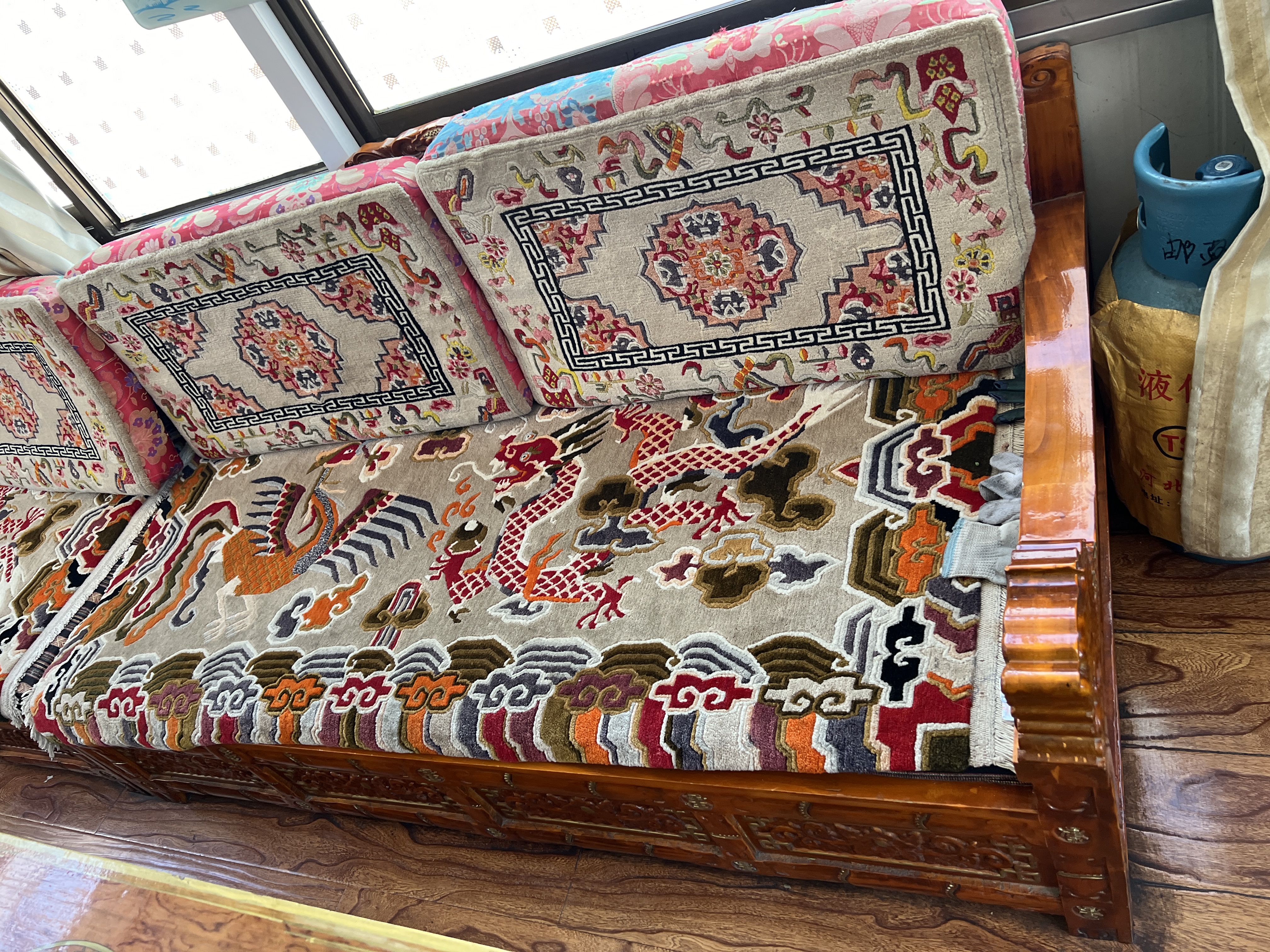
Altitude Is Everything
The sheep that supply Tibetan carpet wool graze at elevations above 4,000 meters — higher than any other wool-producing livestock on the planet. In this extreme environment, where winter temperatures drop below -30°C and summer brings intense solar radiation, the sheep have evolved a fleece of remarkable properties.
The fibers are significantly longer than lowland wool — often 12 to 18 centimeters — giving the yarn exceptional tensile strength. The natural crimp, more pronounced than in warmer-climate wool, provides spring and bounce that translates directly into carpet resilience. And the lanolin content, higher than in commercial wool breeds, imparts a subtle natural sheen and water resistance that protects the carpet for decades.
These qualities cannot be replicated by breeding programs or feed supplements. They are the direct result of altitude, climate, and the slow pace of growth in an unforgiving environment. A sheep at 4,000 meters simply cannot grow wool fast — and that slowness is precisely what gives the fiber its strength.
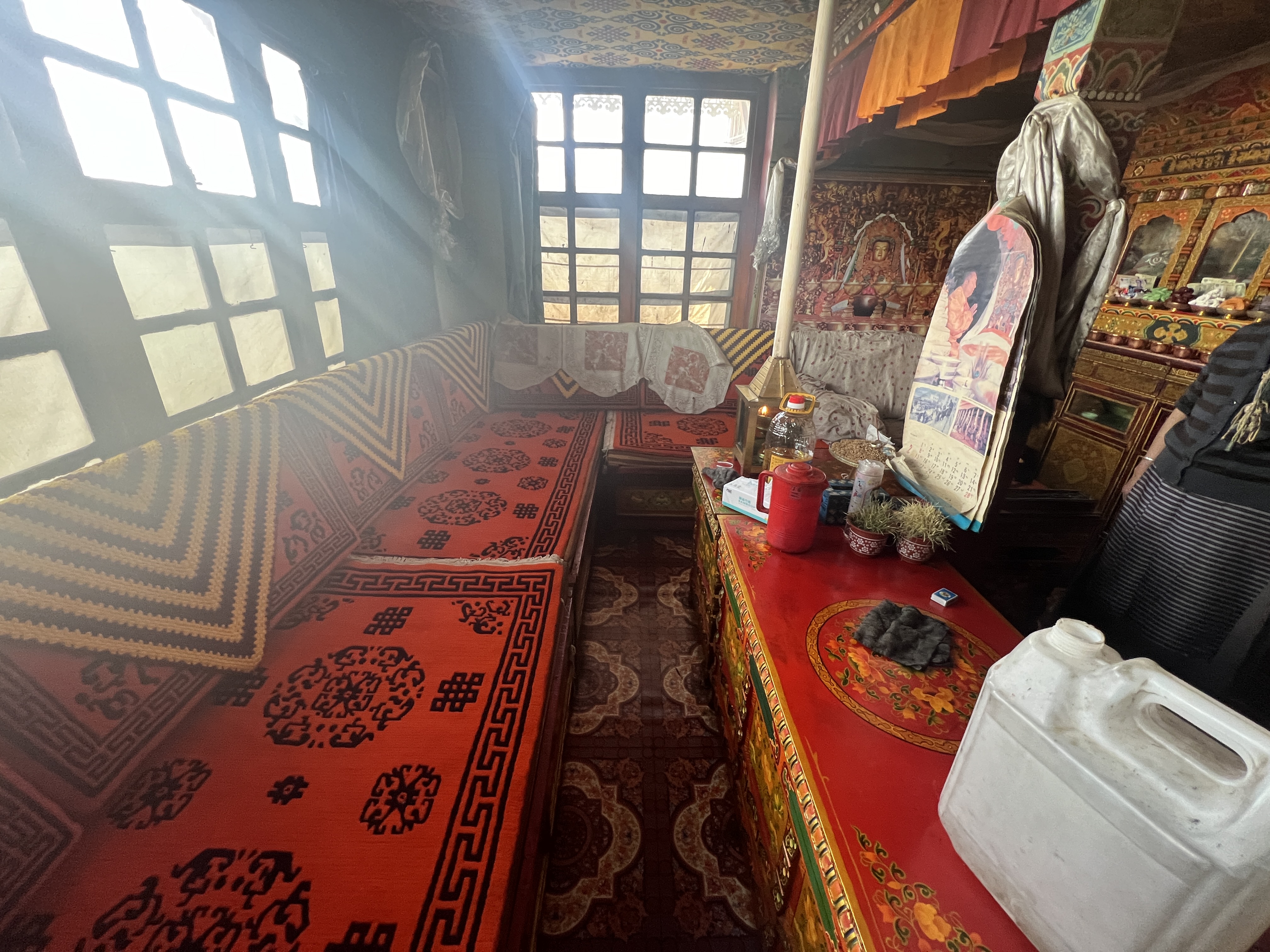
Hand-Spun Character
After shearing — done by hand, once a year in early summer — the wool is washed in cold highland water, carded, and spun. The spinning is traditionally done by women using a drop spindle, a tool that has been used on the plateau for millennia. This is not a mechanized process. The spinner's hands control the twist, the tension, and the final thickness of the yarn.
Hand-spun yarn carries a subtle irregularity that is prized in Tibetan carpets. Slight variations in thickness — invisible to the casual eye but felt by the hand — create a living surface texture. Machine-spun yarn, with its mechanical uniformity, produces a carpet surface that is technically perfect but visually flat. Hand-spun yarn gives the carpet a quality of aliveness, as if the textile itself were breathing.
Wool Knowledge as Cultural Knowledge
Historically, Tibetan weavers possessed detailed knowledge of wool grades. Wool from higher-altitude sheep — longer, stronger, more resilient — was reserved for carpets that would see heavy use: khaden in family living spaces, temple runners in monastery assembly halls. Finer wool from slightly lower elevations was used for clothing, cushion covers, and more delicate textiles.
This knowledge was not written down. It was transmitted orally, from master to apprentice, from mother to daughter, embedded in the practice of the craft itself. A weaver could assess a batch of wool by touch — its length, its crimp, its lanolin content — and know immediately what it was suited for. This embodied knowledge is as much a part of the Tibetan carpet tradition as the loom itself.