 WOVEN PLATEAU
The Essential Textile
A Rug to Live On
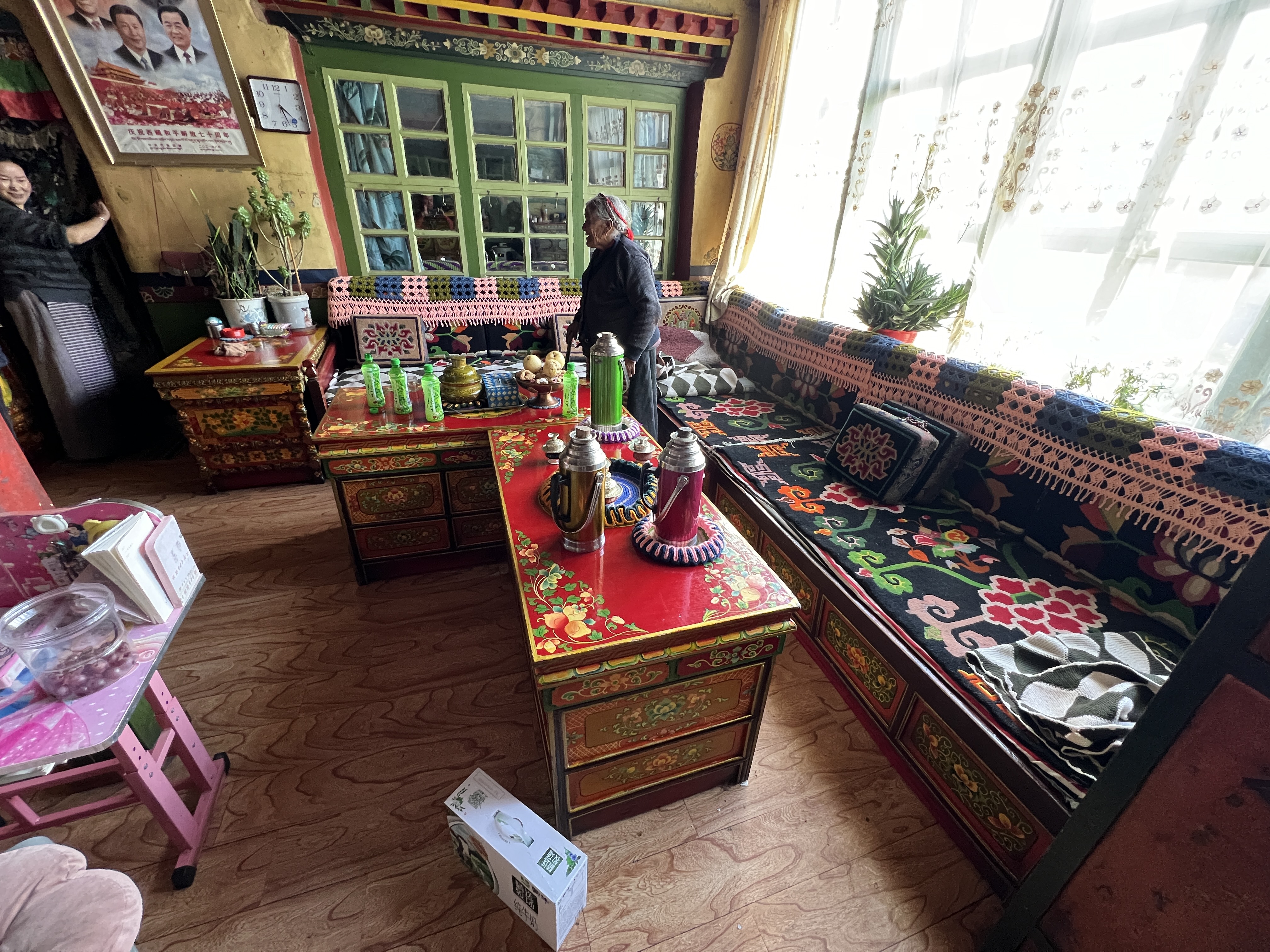
In Tibetan homes, the khaden is not placed under furniture. It is the furniture — a defined space for the body to sit, recline, eat, receive guests, and rest. It is the most personal and versatile of all Tibetan textile forms.
What Is a Khaden?
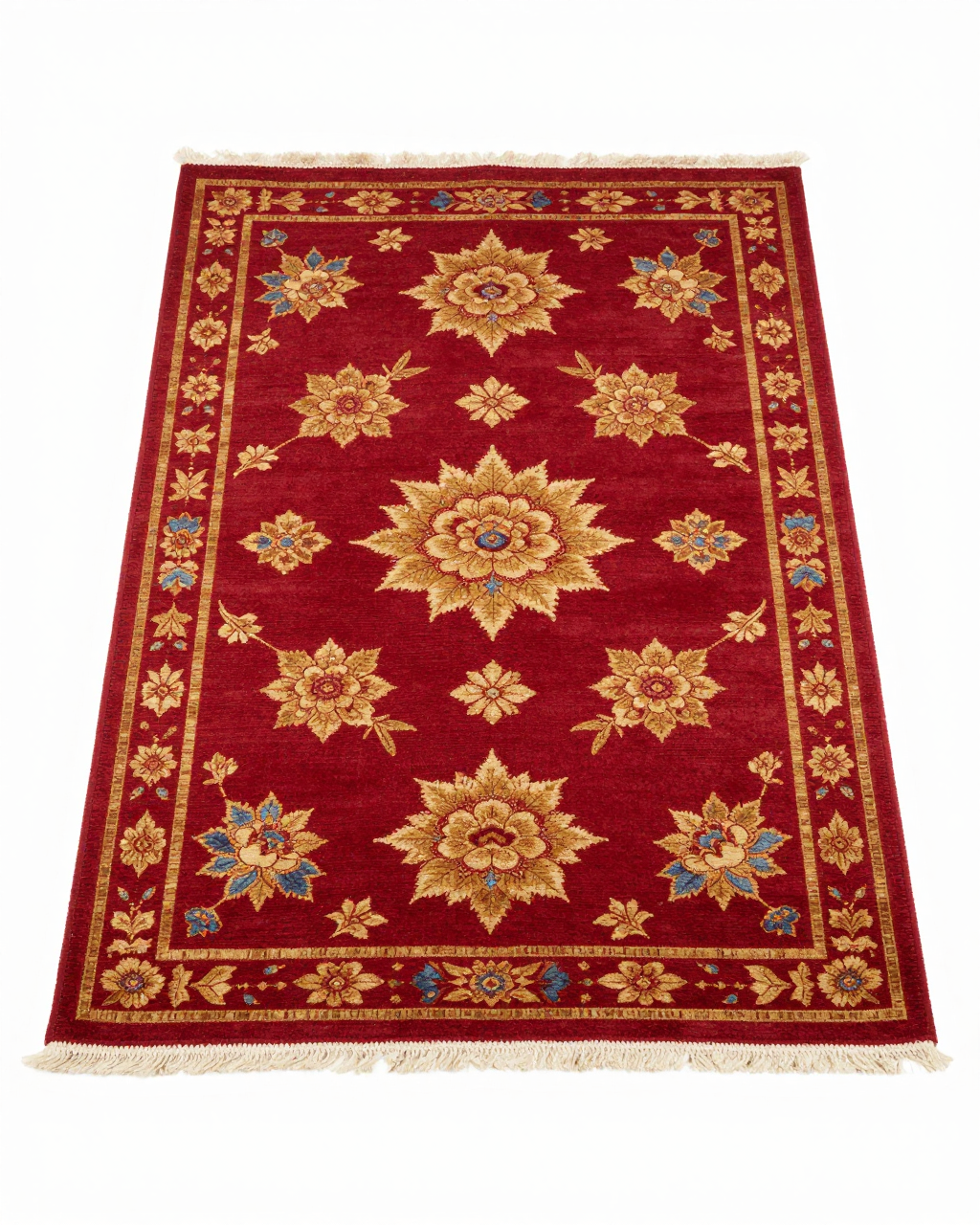
The word khaden refers to a sitting rug — typically around 80 x 160 cm, roughly the size of a body at rest. It is larger than a cushion, smaller than a floor rug, and designed to create an intimate zone around the seated person. In traditional Tibetan homes, the khaden was placed on the kang — a raised platform that ran along the wall — defining the family's primary living space.
A khaden is not walked on; it is sat upon, reclined against, and lived with. This distinction is essential. It shapes everything about the textile — its density, its pattern orientation, its emotional presence. A khaden is seen from above, experienced at close range, and touched by the body daily.
The Life of a Khaden
A well-made khaden had a long and evolving life within the household. When new, it occupied the most prominent position — the guest area, the family gathering space. As it aged and wore, it moved to less formal areas: the sleeping quarters, then the kitchen, and eventually — cut into smaller pieces — to door coverings, saddle pads, or cushion covers.
Nothing was wasted. The khaden was not a decorative object to be preserved in pristine condition; it was a functional textile that served the family through every phase of its material life. This cycle of use — from honored centerpiece to humble utility — reflects a philosophy of material respect that is deeply embedded in Tibetan culture.
The Khaden in a Modern Home
The khaden translates remarkably well to contemporary interiors — perhaps better than any other traditional Tibetan textile. Its body-scale proportions make it ideal for spaces where a full room-size rug would be impractical: a reading nook, a meditation corner, beside a low bed, or in a tea room where guests sit close to the ground.
Unlike conventional rugs that are arranged around furniture, the khaden creates its own destination. Place one by a window with a few cushions, and you have an instant reading corner. Put one in a meditation space, and it defines a warm, tactile boundary for practice. Lay one beside a daybed, and it extends the lounging surface to the floor.
The khaden is not about making a room look like Tibet. It is about bringing a different way of inhabiting space — one that values sitting, staying, and the quiet presence of handcraft — into the modern home. In a world of constant motion, the khaden offers a place to stop.
Choosing Your Khaden
When selecting a khaden, consider its relationship to your body and your space. Denser knotting (800+ knots per square decimeter) produces a firmer surface with crisper pattern definition — ideal for meditation or as a statement piece. More open weaves create a softer, more yielding surface suited to lounging and daily use.
The pattern orientation matters. Central medallions anchor the space; directional motifs like dragons or phoenixes create a sense of flow. Border designs frame the sitting area, giving it a sense of enclosure and protection — much as they have done in Tibetan homes for centuries.